

The Great Seattle Fire
June 6, 1889

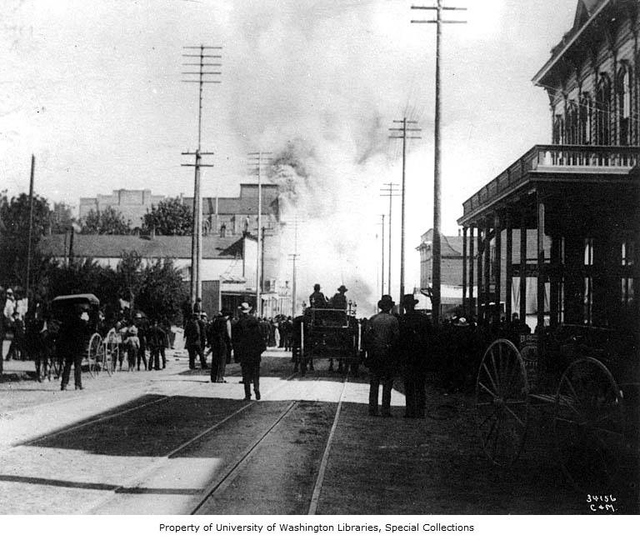
About a half hour after the start of the fire. First Avenue. Asahel Curtis photograph of Seattle Volunteer Fire Department Fire Wagon No. 4 running to the scene (University of Washington Libraries, Special Collections).
At about 2:30 p.m., June 6, 1889, a twenty-four-year-old Swedish carpenter named John E. Back inattentively allowed a pot of glue being heated over a gas fire in the Victor Clairmont and Company Cabinet Shop in the subbasement of the Pontius Building located on today’s site of the Old Federal Building to boil over, igniting wood chips and turpentine covering the floor. Back stupidly threw water onto the glue pot, only to spark a blazing fire. Amazingly, the glue pot survived the fire, and can today be seen at Seattle’s Museum of History and Industry.
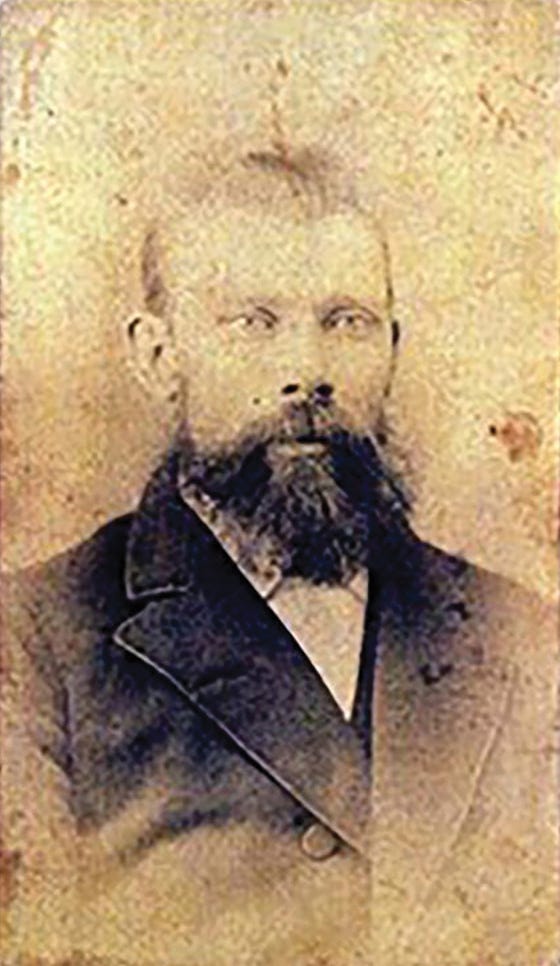
Circa 1885 studio portrait of Swedish carpenter John Back.
We can be thankful that many Seattle photographers of the time, some losing their photography studios to the fire, extensively documented the tragedy. Hundreds of spectacular photographs survive, capturing the early moments of the fire, the city’s ruination, the recovery and rebuilding.
The row of buildings along the west side of Front Street (First Avenue) stood on pilings, and the open space beneath served both as a conduit for the fire and a bellows for a stiff June wind stoking the flames. Seattle’s streets were paved with wood planks, lined with wood boardwalks. The wind pushed the fire onto the boardwalks and planks, igniting surrounding wood frame structures, and then blew the embers across Front Street, igniting the buildings on the east side of the street.
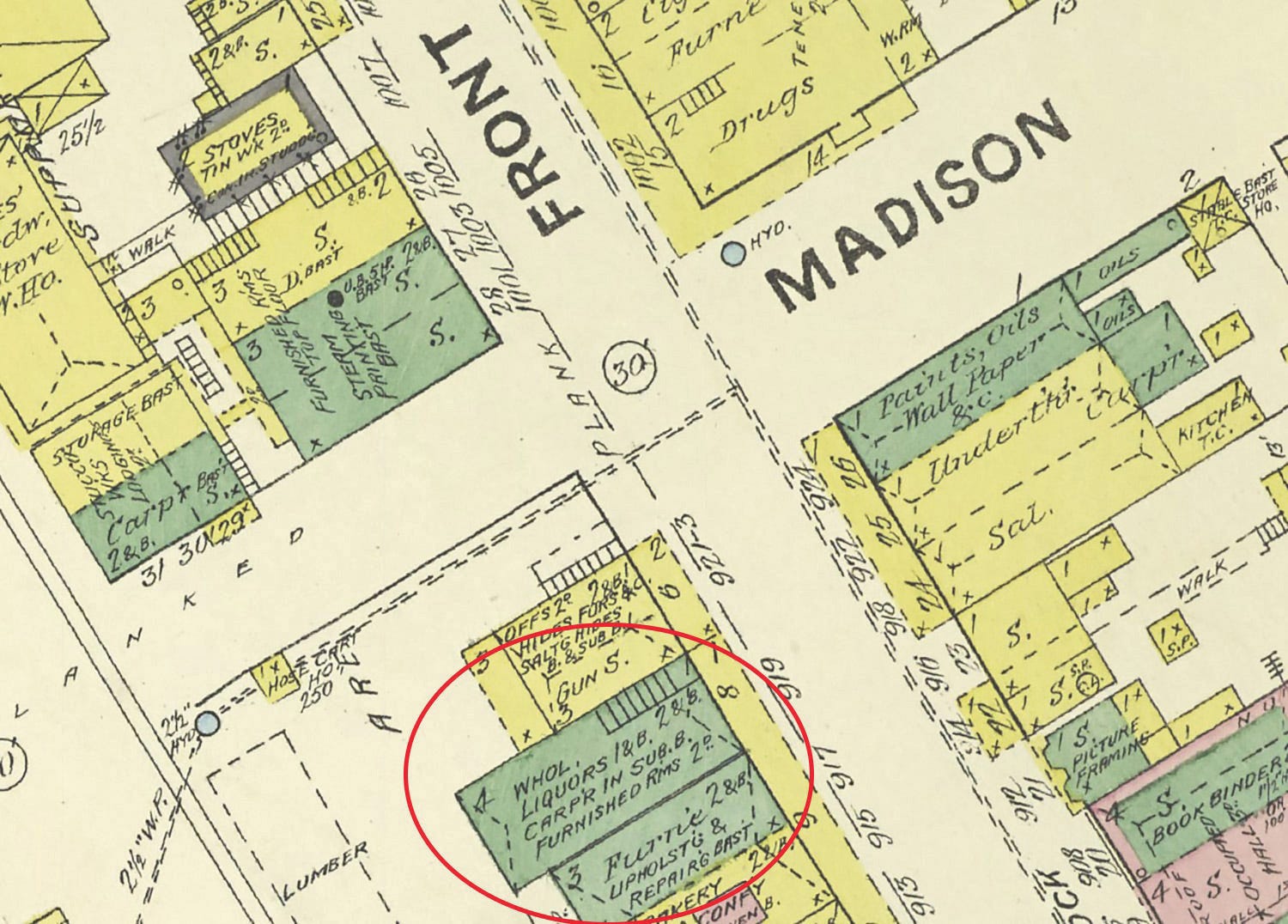
Detail from 1888 Sanborn Fire Insurance Map of Seattle showing two story with basement wood frame Pontius Building on Front Street (First Avenue) near corner with Madison Street. The buildings above the bluff along the west side of Front Street were built on pilings. Note CARP’R IN SUB.B, carpenter shop in sub-basement (giving us an idea of the steepness of that Front Street bluff, steep enough to provide room for two basements). Plus, nothing like having a wholesale liquor distributor occupying two floors upstairs to provide fuel for a fire.
Someone sounded a fire alarm. The town’s volunteer firefighters raced to the scene with their new steam-powered fire engine and fire wagons. The men rolled hoses to the hydrants. With all the hydrants opening simultaneously, water pressure failed. Firefighters tried rolling hoses to the shoreline. The tide was out, beyond the reach of the hoses. In the face of the fast-spreading fire, the volunteer firefighters fell back. Cheers from the growing crowd of onlookers turned to jeers. Unsure what to do, Acting Fire Chief James Murphy passed his command to Mayor Robert Moran. The actual Fire Chief, Josiah Collins, was in San Francisco that fateful day ironically attending a firefighters’ convention.
Mayor Moran worked to organize the spectators into hand brigades to rescue as much of the contents of the buildings as possible before they burned. Reports that some buildings were dynamited to try to stop the advance of the fire most likely resulted from the copious stocks of dynamite and ammunition in the many hardware stores which caught fire and started exploding. Rescued goods were piled onto side streets and wharfs. Goods were taken aboard ships to safety. Much of the rescued goods were destroyed by blowing embers and torches which set the wharfs and lumber mills on fire.
Twelve hours later when the fire burned out, fifty-eight city blocks, about 116 acres, had been reduced to ashes (according to C. W. Austin and H. S. Scott, The Great Seattle Fire of June 6th, 1889, published 1889, page 20, available University of Washington Libraries Digital Collections). No lives were lost, but the city boasted that a million or so rats were eradicated.
A reporter with The Seattle Post-Intelligencer newspaper caught up with John Back on June 22. The digital copy (That Immortal Glue-Pot/The Chance Incendiary Tells How the Fire Started, June 22, 1889, page 4) is hard to read, which is why I do not reproduce it here. The reporter described Back as a “short, thick-cut blonde, of mediocre intelligence. . .” When the reporter asked how Back started the fire, Back replied, “I can’t tell. I put glue in and water on it, and I can’t tell no more about it.” Back admitted he wandered off. When the glue pot boiled over igniting a fire, Back continued, “Then I run and took the pot of water to smother the fire and poured it over the pot of glue, which was blazing up high. When I throw the water on, the glue flew all over the shop into the shavings and everything take fire.” After giving his interview to the Post-Intelligencer, John Back quickly and quietly left town, never to be heard from again.
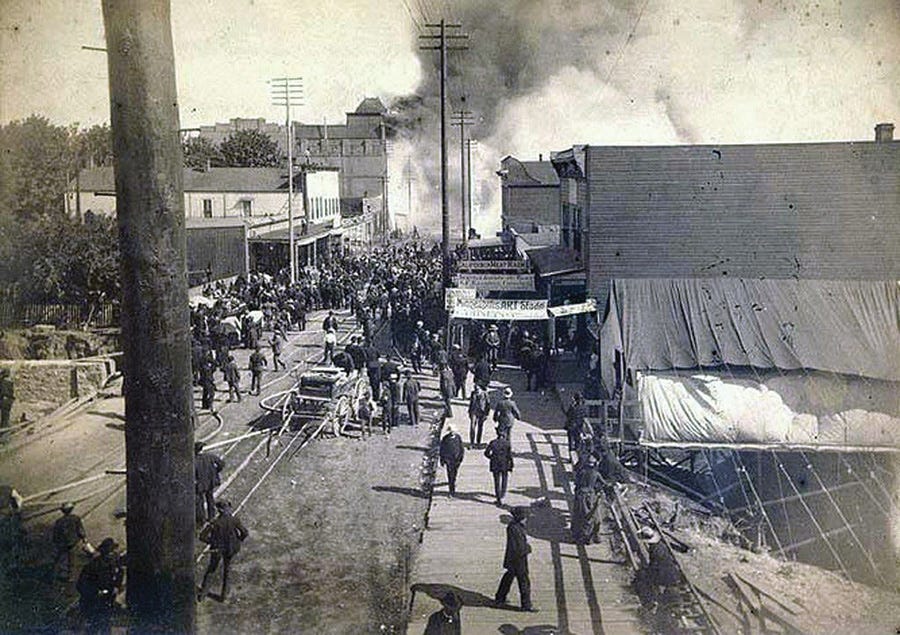
Photographer William Boyd lost his photography studio, but captured this image of Frye’s Opera House catching fire, from Front Street (First Avenue) at Spring Street, about one half hour after the start of the fire (from Welford Beaton, The City That Made Itself, 1914).
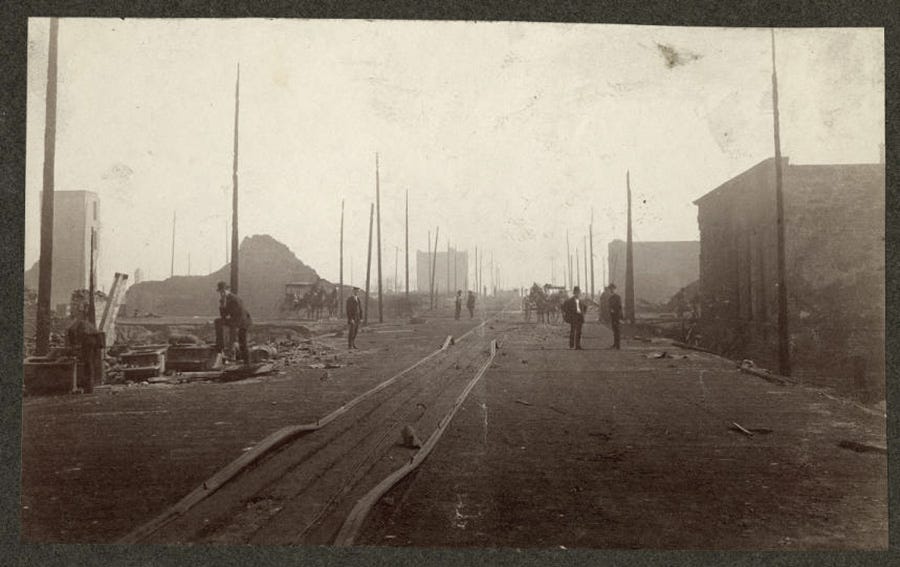
John P. Soule photograph of fire-warped streetcar tracks along Commercial Street (First Avenue South) looking south from Washington Street (Courtesy Seattle Public Library spl_shp_5145).
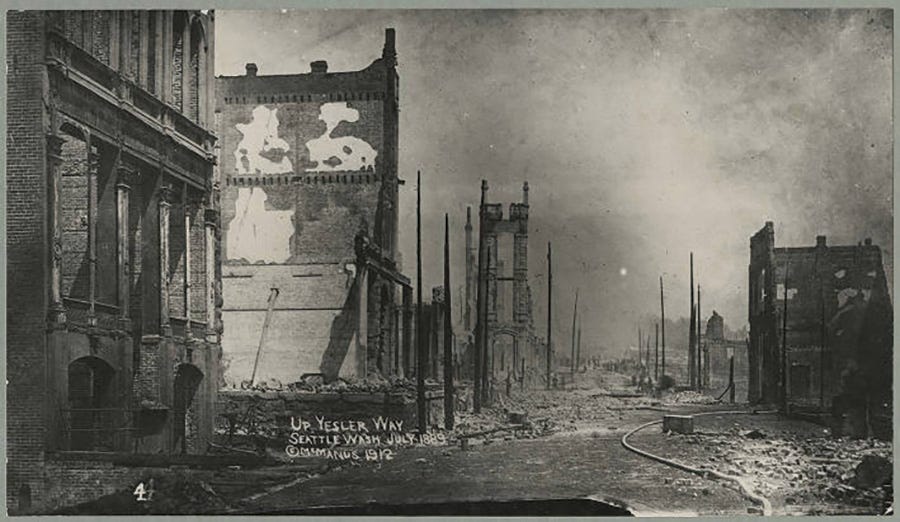
John P. Soule photograph of ruins along Yesler Way, Occidental Hotel at center (Courtesy Seattle Public Library spl_shp_22889).
Famed British author Rudyard Kipling visited Seattle within weeks of the fire. Kipling described steaming into the ruined city in the early evening: “In the ghostly twilight, just as the forest fires were beginning to glare from the unthrifty islands, we struck it — struck it heavily, for the wharves had all been burned down, and we tied up where we could, crashing into the rotten foundations of a boathouse as a pig roots in high grass. The town. . . was built upon a hill. In the heart of the business quarters there was a horrible black smudge, as though a Hand had come down and rubbed the place smooth. I know now what being wiped out means (emphasis added). The smudge seemed to be about a mile long, and its blackness was relieved by tents in which men were doing business with the wreck of the stock they had saved.” From Sea to Sea and Other Sketches: Letters of Travel, Volume 2 (1899, pages 47-48).
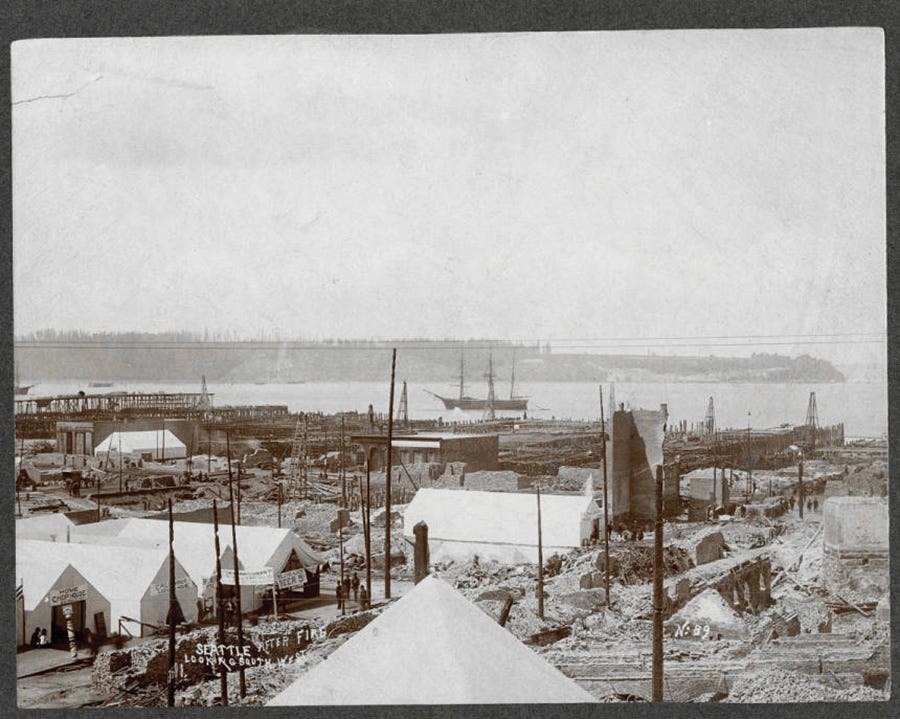
John P. Soule photograph of tent city rising from the ashes of the Great Seattle Fire, Second Avenue and James Street (Courtesy Seattle Public Library spl_shp_5232). West Seattle visible in the distance.
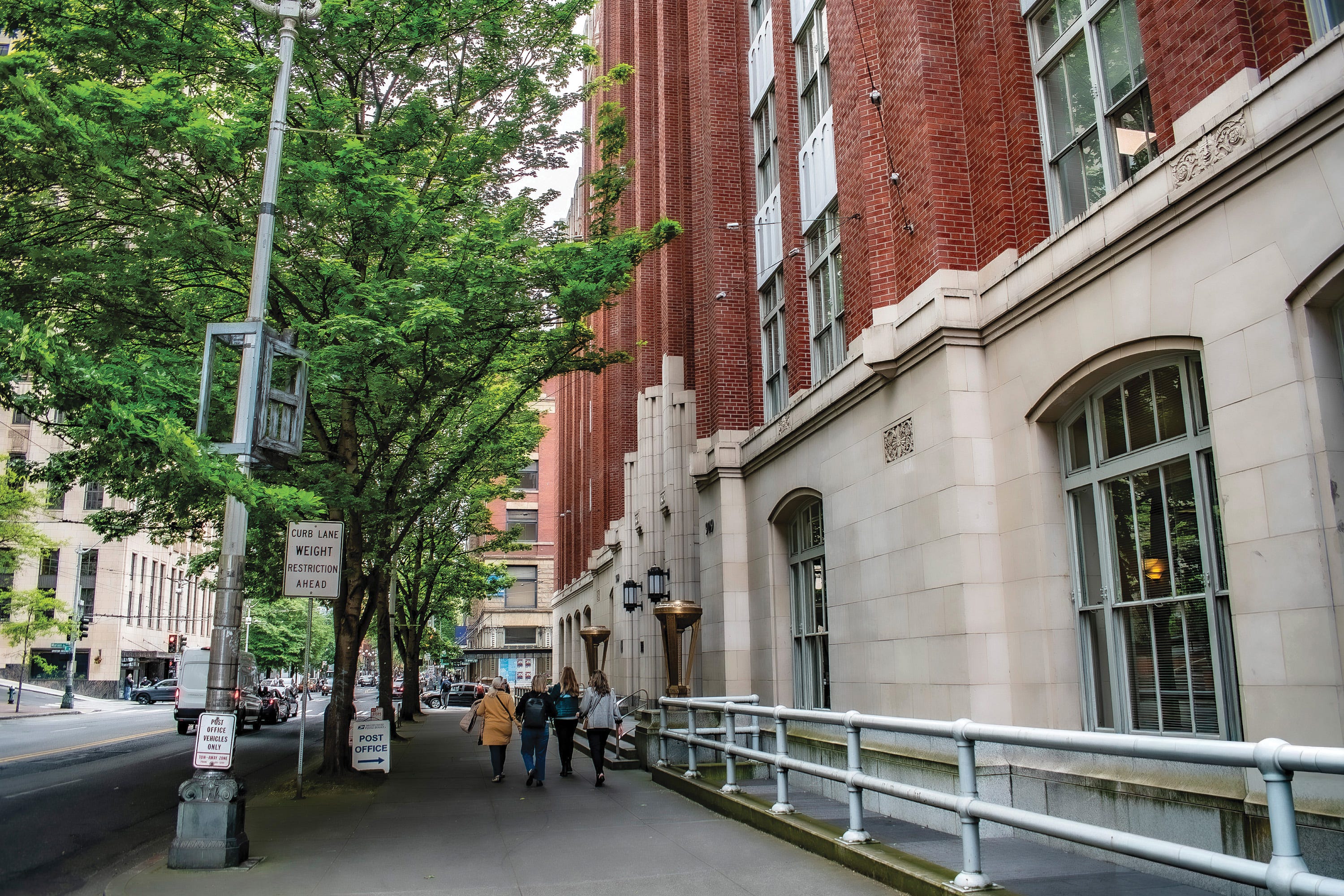
Site of Victor Clairmont and Company Cabinet Shop, today’s Old Federal Building. Look to the pole to the left.
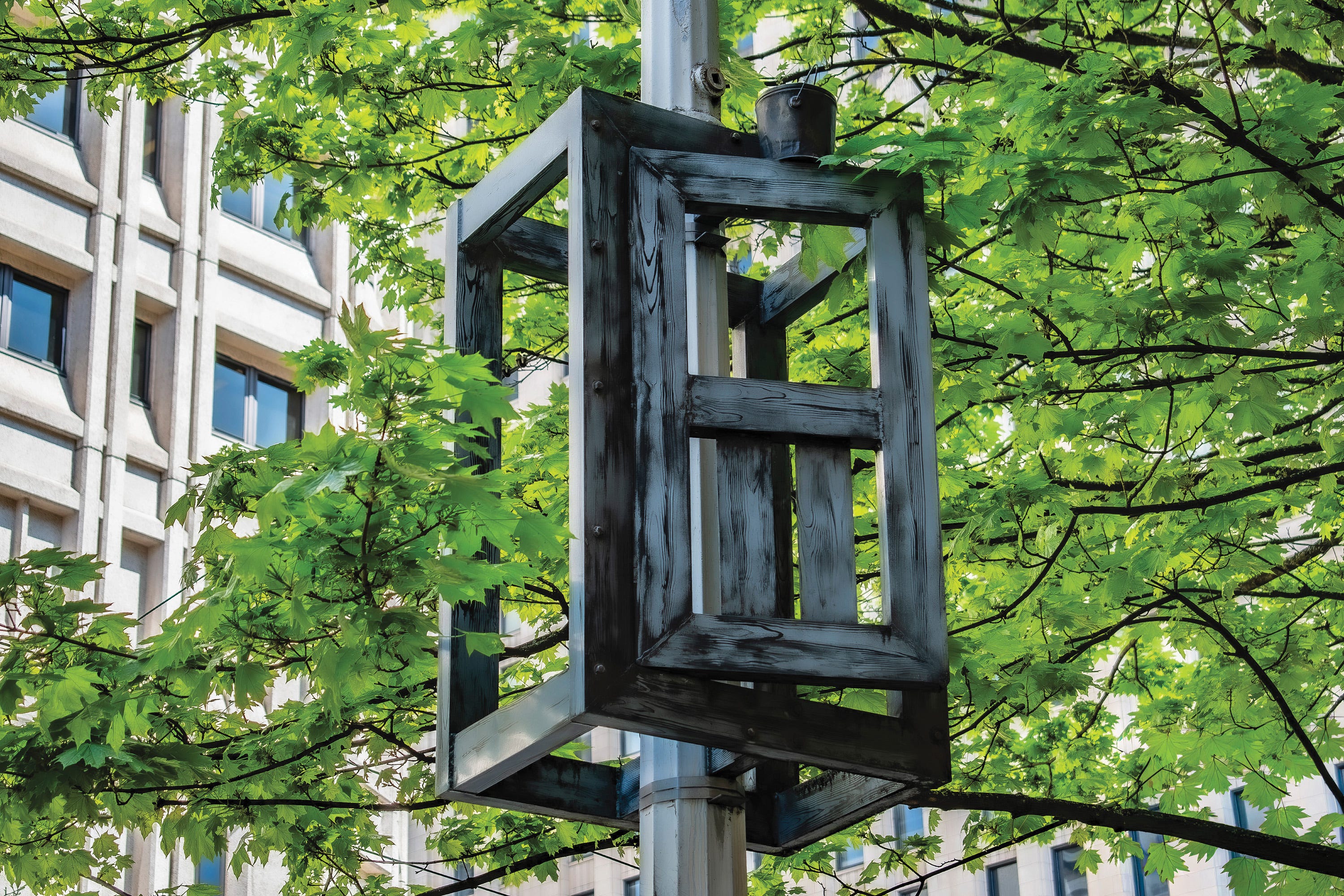
Whimsical glue pot and cabinet (play on cabinet shop) art installation near the northeast corner of the Old Federal Building along First Avenue.
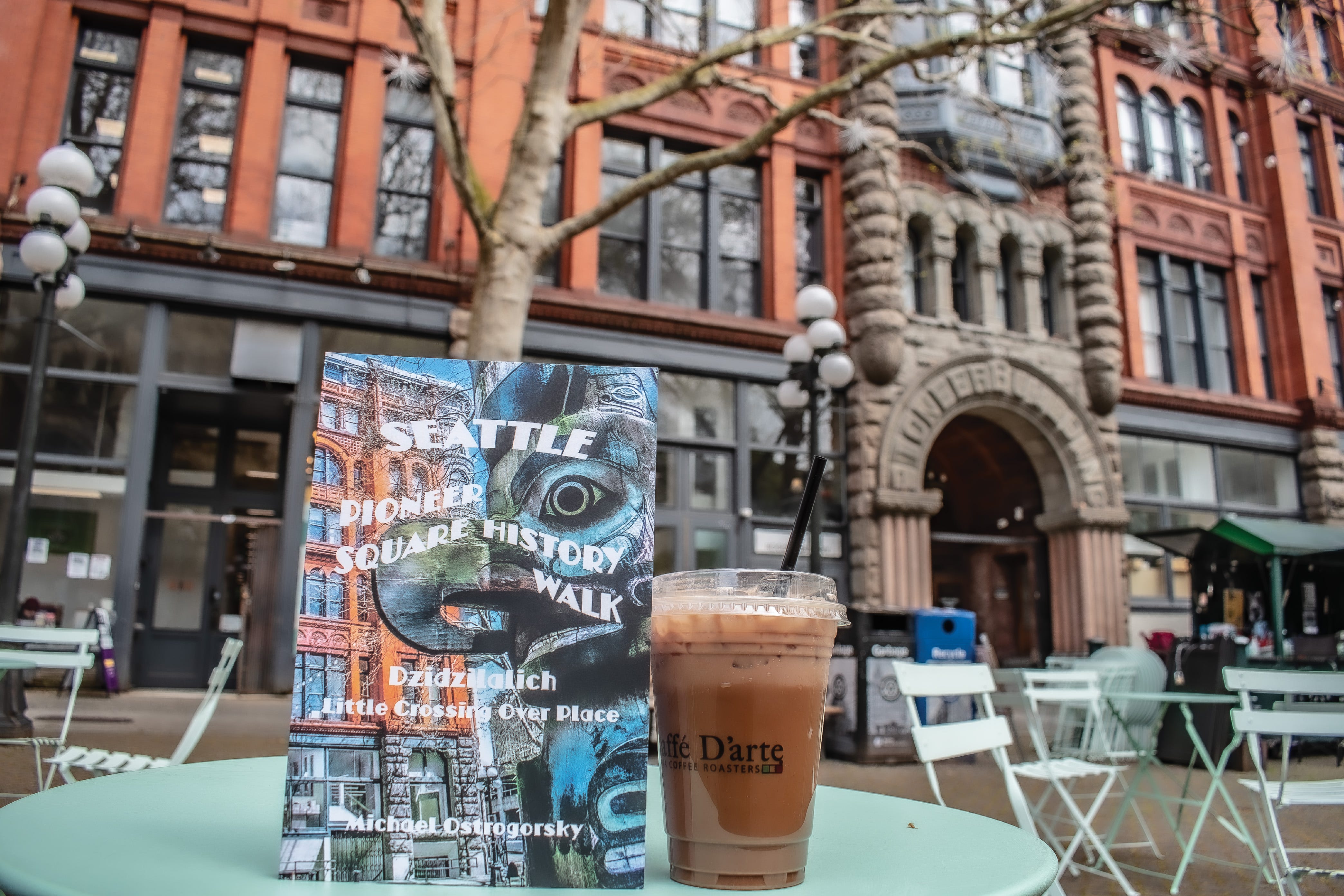
This is an excerpt from my new book, Seattle Pioneer Square History Walk, published by Blue Parrot Books, is now available at Arundel Books at First & Jackson, Long Brothers Books at Occidental & Jackson, as well as Elliott Bay Book Company on Capitol Hill!
The “perfect” conditions that let the fire take hold and spread give a lot more point to subsequent safety regulations! Thanks for the history lesson.